Analysis and Comment

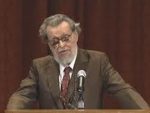
Hawking the theologian – his sentences and nuance are strangers.

Friday, May 20th, 2011

The study of philosophy and theology are a waste of time according to one of the world’s greatest living scientists, Stephen Hawking. ‘Most of it is based on a complete disregard of observational evidence and modern science.’ Nuance and a Hawking sentence are, by necessity, strangers, says Adam Clarke Eastes in his critique of what Read more


The right to infuriate – legal but morally questionable

Friday, May 20th, 2011

An action can be legal but morally questionable. “Whether it was legal or illegal doesn’t change the question of its morality. Among others throughout history, Nazi Germany, with its Final Solution, and South Africa with its apartheid, would have deemed their actions legal. This didn’t make them moral; morality will always transcend the fickle laws Read more

Has Secrecy a Place in the Church?

Tuesday, May 17th, 2011

Gerald Arbuckle reflects on the removal of Bishop Morris: The recent, unfortunate forced early retirement of Bishop Morris of Toowoomba has caused significant disquiet, not just in Australia, but throughout the Catholic world says Gerald Arbuckle. Even the Australian Bishops’ Conference, while reaffirming their loyalty to the Pope as the head of the College of Bishops, Read more

The sexuality of Christ in renaissance art

Tuesday, May 17th, 2011

The recent death of the Art historian Leo Steinberg has revived interest in his controversial  book “The Sexuality of Christ in Renaissance Art and in Modern Oblivion.” The book grew out of a question that had apparently occurred to no other modern scholar: Why is it that in so many Renaissance paintings of the Madonna and Child, Read more

Boundaries of infallible teaching

Friday, May 13th, 2011

When Pope Benedict XVI used the word “infallible” in reference to the ban on women’s ordination in a recent letter informing an Australian bishop he’d been sacked, it marked the latest chapter of a long-simmering debate in Catholicism: exactly where should the boundaries of infallible teaching be drawn? On one side are critics of “creeping Read more

Make more use of empty churches

Friday, May 13th, 2011

A call has been made to make more use of empty churches. Hundreds of church buildings around Auckland stand empty throughout the week and the council is being encouraged to look at ways to save money by using them. The Pacific community came up with the idea at a meeting discussing submissions on the Auckland Read more

Was Osama bin Laden’s assassination moral?

Tuesday, May 10th, 2011

Was Osama bin Laden’s assassination a moral and /or legal act? This question continues to engage the world’s news agencies and pundits. As the drama plays out and information emerges, leaders of Western democracies are generally seeing his death as justified. The innovative Huffington Post looked at the question by asking a small sampling of Read more

It’s a new cultural epoch

Tuesday, May 10th, 2011

A new cultural epoch means new ways of doing things. “We’re living in the fourth cultural epoch, or cultural period, the first having been the Agrarian Age and then the Industrial Age followed by the Information Age and now what I refer to as the Inventive Age,” says Doug Pagitt.  “My suggestion is that in each of Read more

Label worship… Consumerism rules OK

Friday, May 6th, 2011

In a study of 400 people in the United Kingdom half identified themselves as religious and thought that materialism was wrong.  The survey found that religious consumers frowned upon advertisements for luxury watches that extolled showiness or desirability. However, when shown advertisements for the same watch that focused on durability and quality, religious consumers were more Read more

Papacy, Monarchy – embody intangible realities

Friday, May 6th, 2011

Last Friday night we were forced to make agonizing choices – which TV programme? The netball, the rugby or The Wedding? Issues implied by one of the topics merit our serious attention. Any debate on the British Monarchy is like a debate on the Church – in many ways they are similar. Neither has democratic Read more