This weekend, in light of the continuing protests at St Paul’s, many in the Church will be asking themselves whether they side with the protesters or the authorities. But as author and Church historian Stephen Tomkins writes, the debate goes back at least 2,000 years.
Major national Churches are often the focus of protest. A homeless man, known to the authorities for his radical activism, once slipped into one with his supporters and wrecked it, overturning tables and lashing out with a homemade whip.
His point was that what should have been a place of prayer for all people had become an institution fleecing the poor. Those were tougher times than now, and he was executed a week later.
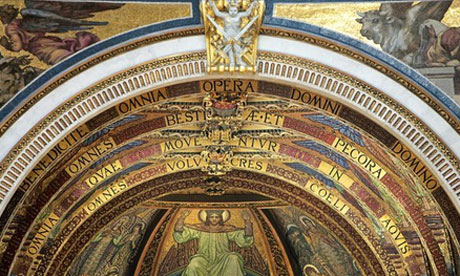
There are a lot of pictures of him in St Paul’s Cathedral, where on Thursday the Reverend Giles Fraser, canon chancellor of St Paul’s, resigned at the prospect of the Cathedral using force to clear protesters from its grounds.
Those pictures tend not to focus on Christ driving the money changers out of the Jerusalem temple, but outside the protesters made up for that. One of them dressed as Jesus carried the sign, “I threw out the money lenders for a reason.”
The Christian Church seems to have come a long way from its radical origins. The magnificent St Paul’s, reverberating with power and wealth, rehouses the homeless Messiah in a palace. It is in complete harmony with the financial centre that surrounds it and helps to finance it.
Then again, in many ways, it is as firmly outside the establishment as it ever was. The Church was among the protesters as well as towering over them, with various worship services being held in the camp, sermons on the steps and some Christian organisations having signed a statement of solidarity with them.
So is St Paul’s betraying the true spirit of Christian radicalism, or is it an example of the establishment religion that Christianity genuinely is?
There is no doubt that when Christianity first appeared in the Roman Empire, it came as a radical challenge to it. Believing that all people are created in the image of God, the Church welcomed slaves and women as members in their own right, even as leaders and teachers, and it was such an affront to Roman family values that Christians were killed in vast numbers.
Yet right from the start, the most radical Christian leader – St Paul, of cathedral fame – told his followers, “Let every person be subject to the governing authorities… who are God’s servants for your good.”
Continue reading Is the Church inside or outside the establishment?
Additional reading
News category: Features.